
About the Parliament
The Pan-African Parliament is the legislative organ of the African Union. Its aim is to evolve into an institution with full legislative powers, whose members are elected by universal adult suffrage.
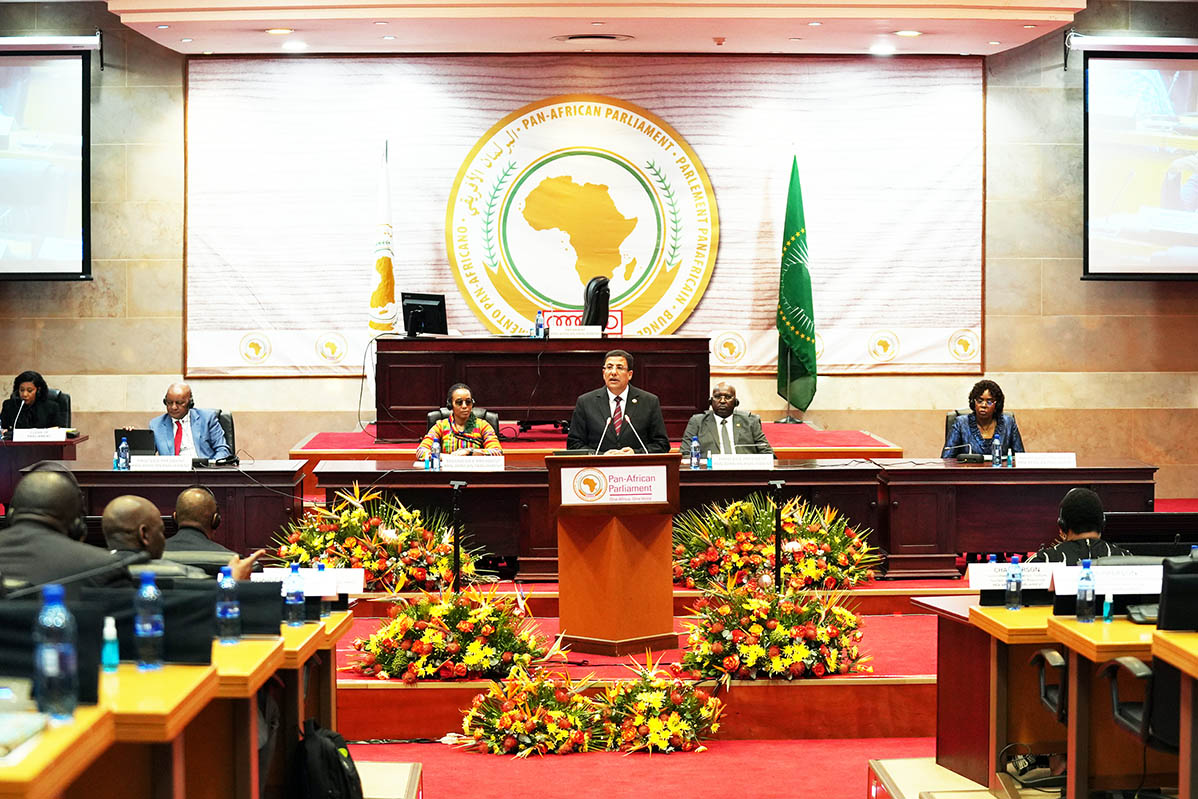
One Africa, One Voice
The establishment of the Pan-African Parliament is informed by a vision to provide a common platform for African peoples and their grass-roots organisations to be more involved in discussions and decision-making on the problems and challenges facing the continent.
The Pan-African Parliamentarians represent all the peoples of Africa.
What We Do
The Functions and Powers of the PAP are defined in Article 11 of the Protocol to the Treaty establishing the African Economic Community Relating to the Pan-African Parliament.
Human rights and governance
- Examine, discuss or express an opinion on any matter, either on its own initiative or at the request of the Assembly or other policy organs and make any recommendations it may deem fit relating to, inter alia, matters pertaining to respect of human rights, the consolidation of democratic institutions and the culture of democracy, as well as the promotion of good governance and the rule of law.
The budget
- Discuss its budget and the budget of the Community and make recommendations thereon prior to its approval by the Assembly of the African Union.
Harmonisation of laws
- Work towards the harmonisation or coordination of the laws of the Member States.
The integration process
- Make recommendations aimed at contributing to the attainment of the objectives of the OAU/AEC and draw attention to the challenges facing the integration process in Africa as well as the strategies for dealing with them.
The constituencies
- Promote the programmes and objectives of the OAU/AEC, in the constituencies of the Member States.
Regional Economic Communities
- Promote the coordination and harmonisation of policies, measures, programmes and activities of the Regional Economic Communities and the parliamentary fora of Africa.
Rules and officers
- Adopt its Rules of Procedure, elect its own President and propose to the Council and the Assembly the size and nature of the support staff of the Pan-African Parliament.
Who We Are
The total number of Members of the PAP is 275. Article 4 of the Protocol establishing the PAP requires that each national Parliament be represented by five members, at least one of whom must be a woman. The representation of each member state must reflect the diversity of political opinions in each National Parliament or deliberative organ.
According to Article 5 of the same Protocol, the Pan-African Parliamentarians are elected or designated by the national Parliaments of the Member States.
How We Work
The PAP is headed by a Bureau which consists of a President and 4 Vice-Presidents. The members of the Bureau represent the five regions of the continent.
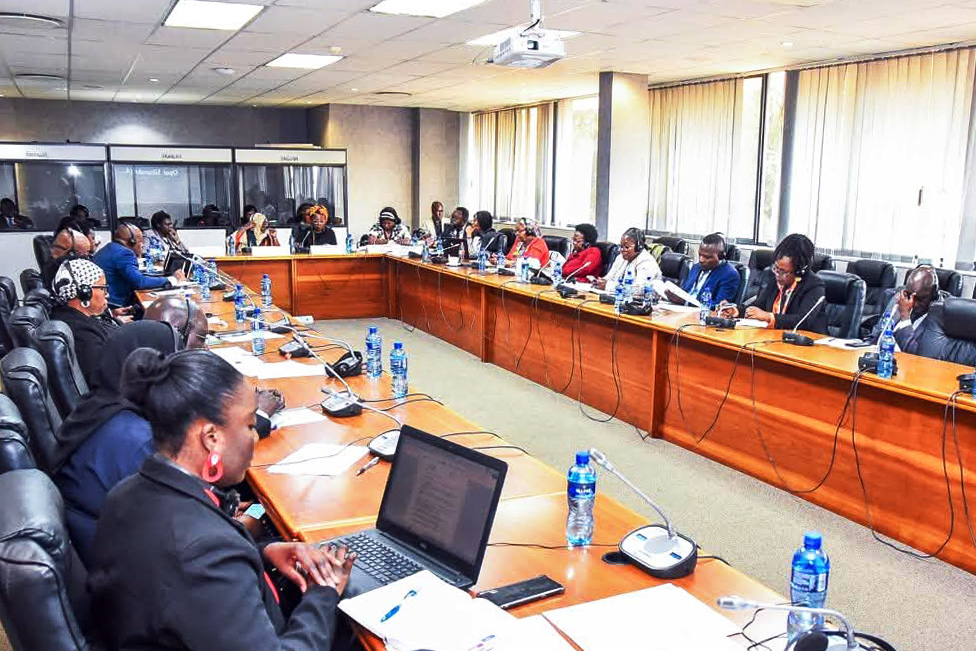
The Pan-African Parliament has eleven Permanent Committees whose functions are aligned to those of the African Union Commissions. The Permanent Committees meet twice a year (March and August) for statutory meetings and can meet more often during parliamentary sessions or for non-statutory meetings when the need arises.
The PAP Rules of Procedure provide for each of the five geographical regions to form a regional caucus composed of its members. The Rules also provide for other types of caucuses to be established to deal with issues of common interest as the PAP deems necessary. The Parliament, therefore, has established the Women’s Caucus and the Caucus on Youth.
Our Origins
The Pan-African Parliament was established in March 2004, by Article 17 of the Constitutive Act of the African Union, as one of the nine Organs provided for in the Treaty Establishing the African Economic Community signed in Abuja, Nigeria, in 1991. The Protocol establishing the PAP has been ratified by 51 Member States.
Where We Are
The seat of the Parliament is in Midrand, South Africa. Details for visitors and for correspondence are on the contact page.