
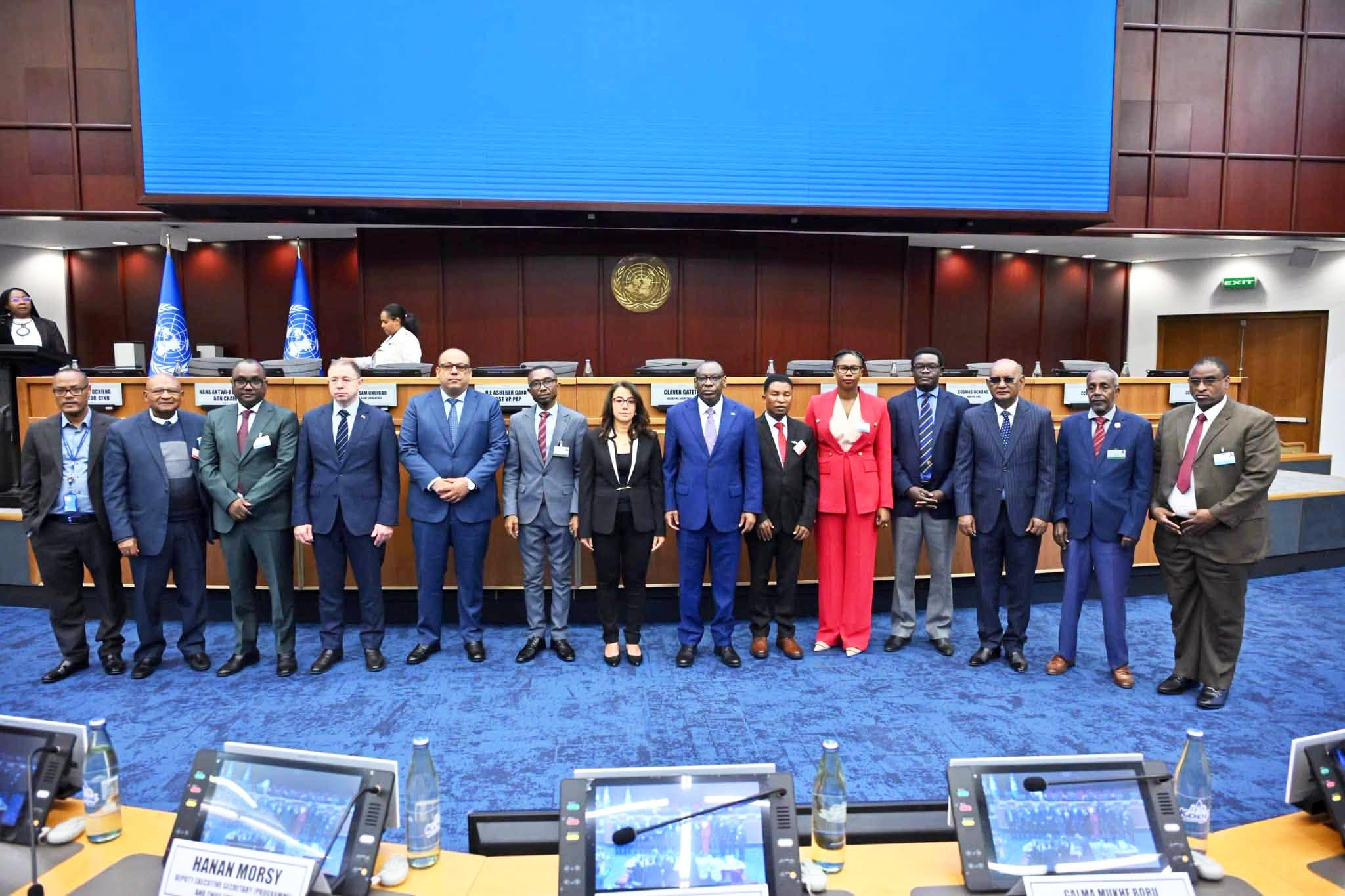
The Pan-African Parliament (PAP) is taking part in the Fourteenth Conference on Climate Change and Development in Africa, held in Addis Ababa, Ethiopia, from 7 to 9 September 2026. The conference is organised by the Climate for Development in Africa Programme of the United Nations Economic Commission for Africa (UNECA), under the theme ‘From Pledges to Implementation: The Belém–Antalya–Addis Roadmap’, bringing together African policymakers, climate negotiators, parliamentarians, development partners and experts ahead of COP31.
The PAP delegation is led by Hon. Dr. Ashebir Gayo, First Vice-President of the Parliament, and includes Hon. Abdallah Barkat, a member of the PAP Committee on Rural Economy, Agriculture, Environment and Natural Resources, together with technical staff from the PAP Secretariat.
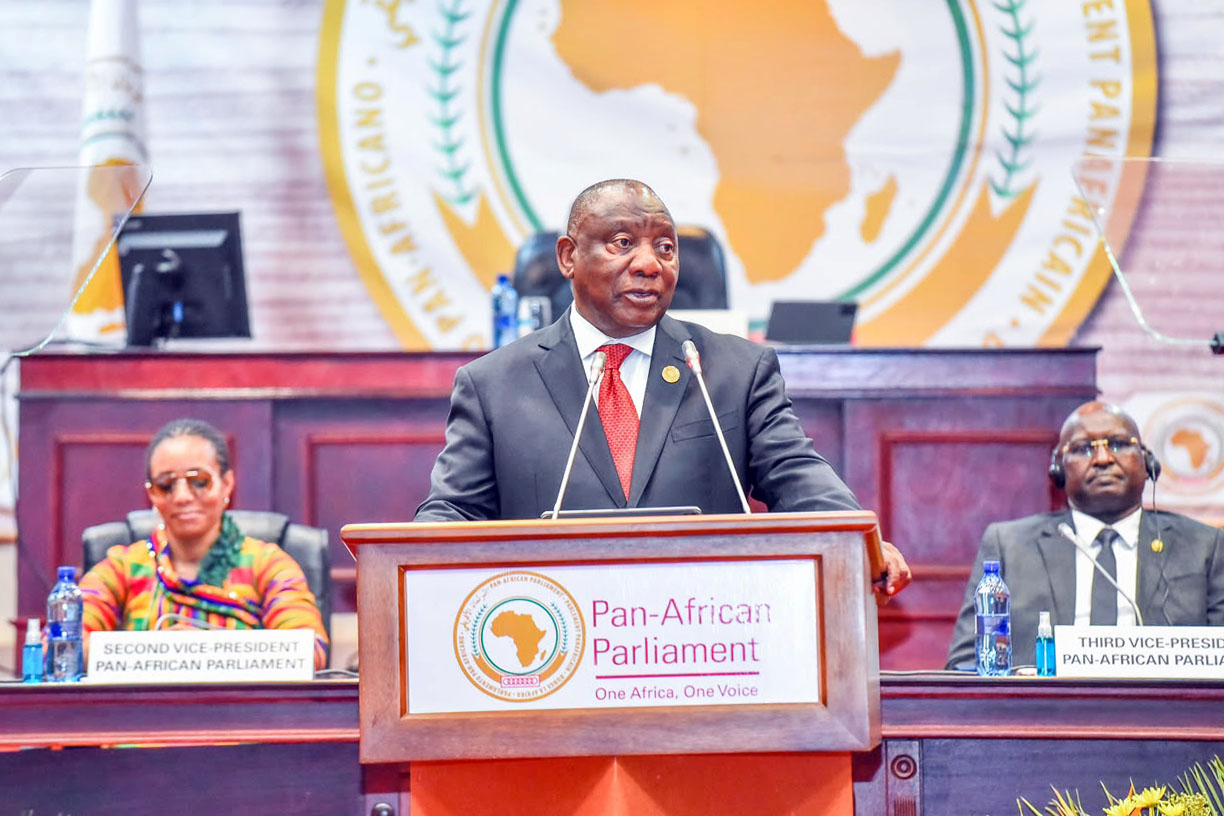
Speaking at a session on African climate leadership in global climate governance, Dr. Gayo offered a parliamentary perspective on the role of African parliaments in translating climate commitments into legislation, budgets, programmes and implementation. He argued that Africa should move beyond participation in global climate processes towards greater climate agency, developing African solutions suited to the continent’s circumstances, priorities and aspirations.
He pointed to the PAP Model Law on Climate Change as a key contribution to African climate governance, offering AU Member States an adaptable framework to strengthen national climate legislation and to translate regional and international commitments into domestic action. The model law addresses climate governance and planning, mitigation, adaptation and resilience, loss and damage, climate finance, climate-induced displacement, carbon markets, data governance, regional cooperation, compliance, access to justice and public participation.
Dr. Gayo emphasised that climate action must be integrated with Africa’s broader development priorities, citing the Model Law on Food and Nutrition Security in Africa, adopted in 2022, and the Model Law on Sustainable Soil Management in Africa as complementary instruments. Climate resilience, he noted, cannot be separated from food systems, land, water and natural-resource governance.
He further called for accessible, affordable and predictable climate finance, effective institutions, parliamentary oversight and accountability, as well as stronger cooperation among African parliaments and international parliamentary networks on climate finance, resilient infrastructure, clean energy, agricultural transformation, natural-resource governance and economic resilience.
Read the original release on pap.au.int
Media contact
Directorate of Communications, Pan-African Parliament · communications@pap.au.int · Gallagher Convention Centre, Midrand, South Africa.